Role
UI/UX Designer
DURATION
30 days
Platform
App
Type
Design
Research
Branding


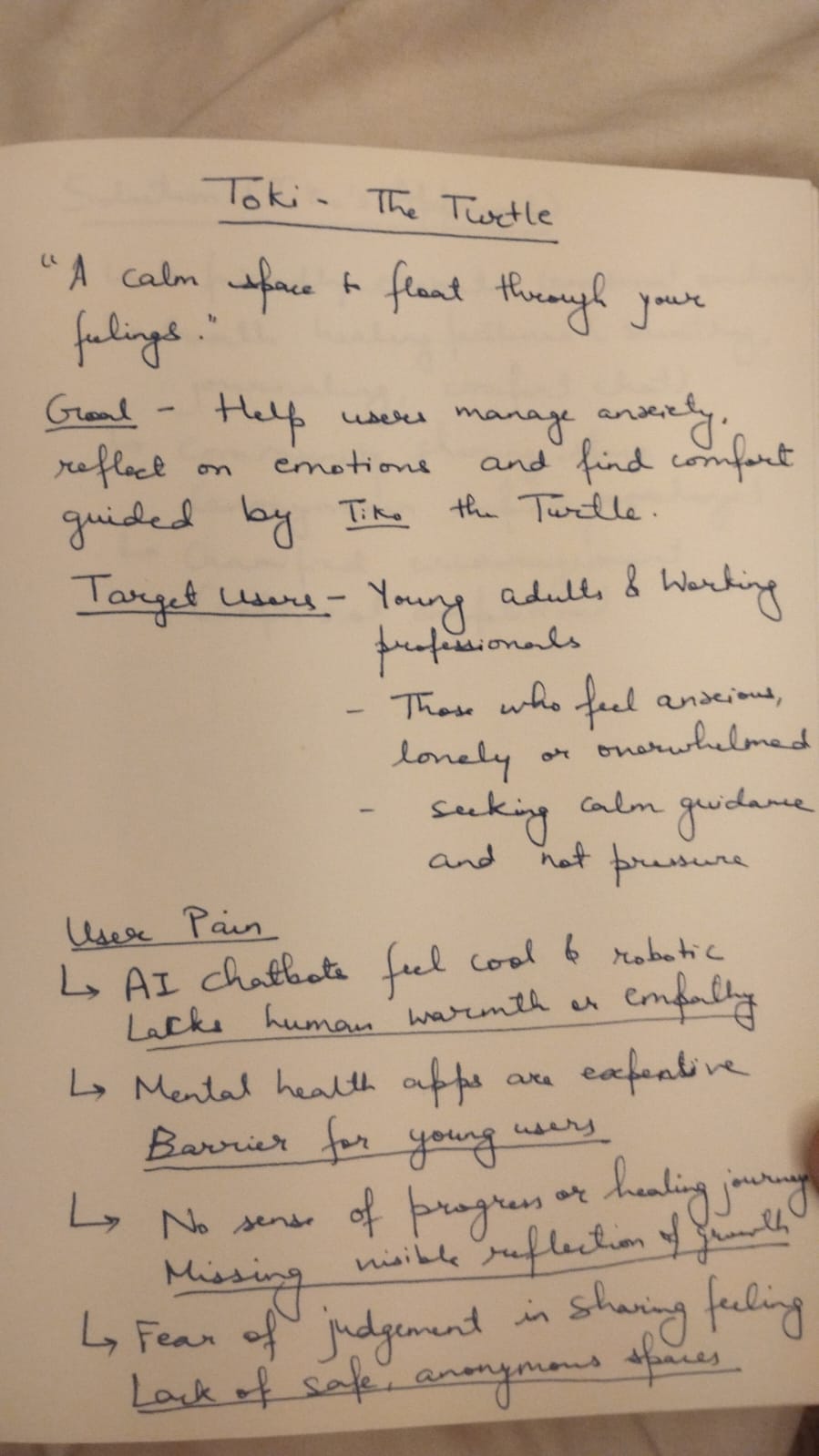
Tiko is a mental health app designed to support users dealing with anxiety and emotional stress. Unlike traditional apps that push productivity or progress, Tiko focuses on gentle healing, offering a safe and pressure-free space through journaling, mood tracking, and supportive interactions. The goal was to create an experience that feels comforting rather than overwhelming.
Most mental health apps:
Feel overwhelming or clinical
Push users to “improve” constantly
Lack emotional sensitivity
Key Problem
How might we design a mental health experience that heals without pressure?


To understand the emotional and behavioral needs of users dealing with anxiety, I conducted user interviews and surveys focused on their daily struggles, coping mechanisms, and experiences with existing mental health apps. The research aimed to uncover emotional triggers, barriers to engagement, and what users truly seek in moments of distress. This helped shape a direction centered around comfort, simplicity, and pressure-free interaction. User Interviews Surveys Empathy Mapping Secondary Research (mental health app analysis)
To understand user needs, I conducted user interviews and surveys with individuals experiencing anxiety and stress. The research focused on identifying emotional triggers, coping behaviors, and expectations from mental health apps. This helped uncover how users seek comfort, not pressure, when engaging with such platforms.

Users feel overwhelmed by goal-driven app
Emotional support is preferred over productivity
Users avoid apps that feel judgmental or demanding
Small, simple actions feel more achievable
Comfort and tone matter more than features
USER PERSPECTIVE
Users experiencing anxiety often look for a safe and calming space where they can express themselves without expectations. They are not always in the right state to follow structured routines or complete tasks. Instead, they seek reassurance, emotional validation, and gentle guidance that adapts to their state of mind.


Users are emotion-driven and sensitive to pressure, often engaging inconsistently based on their mental state. They prefer low-effort interactions and avoid experiences that feel demanding. Their behavior reflects a need for flexibility, comfort, and control over how they engage with the app.
KEY INSIGHTS
Users feel overwhelmed by structured mental health apps
Pressure reduces engagement
Emotional support is valued over productivity
Small actions feel more achievable
Users avoid judgmental or rigid experiences
Comfort and tone impact trust
Consistency depends on emotional state
A pressure-free and safe environment
Gentle guidance instead of strict routines
Easy ways to express emotions
Minimal effort interactions
Emotional reassurance and support


PROBLEM STATEMENT
Users experiencing anxiety need a calming and non-pressurizing digital space because most mental health apps feel overwhelming, structured, and emotionally demanding.
HYPOTHESIS STATEMENT
If users are provided with a gentle, low-pressure mental health experience, then they will engage more consistently and feel more supported in managing their emotions.
VALUE PROPOSITION
A calming, pressure-free space for emotional healing and self-expression.
03 IDEATION
COMPETITOR ANALYSIS
To understand existing solutions, I analyzed leading mental health apps like BetterMe, Youper, Calm, and Wysa. The goal was to identify how these platforms approach emotional support, user engagement, and overall experience. This helped uncover gaps in emotional sensitivity, personalization, and pressure-free interaction.
OPPORTUNITIES AREAS
Emotional-first design
Low-effort interactions
Gentle onboarding
Personalized comfort
HMW
How might we support mental well-being without overwhelming the user?


Journaling Experience
Mood Tracking
Calm Home Dashboard
“Talk with Tiko” Companion
Healing Journey
Professional Support Access
User Profile
04 DESIGN
Key Features
USER FLOW

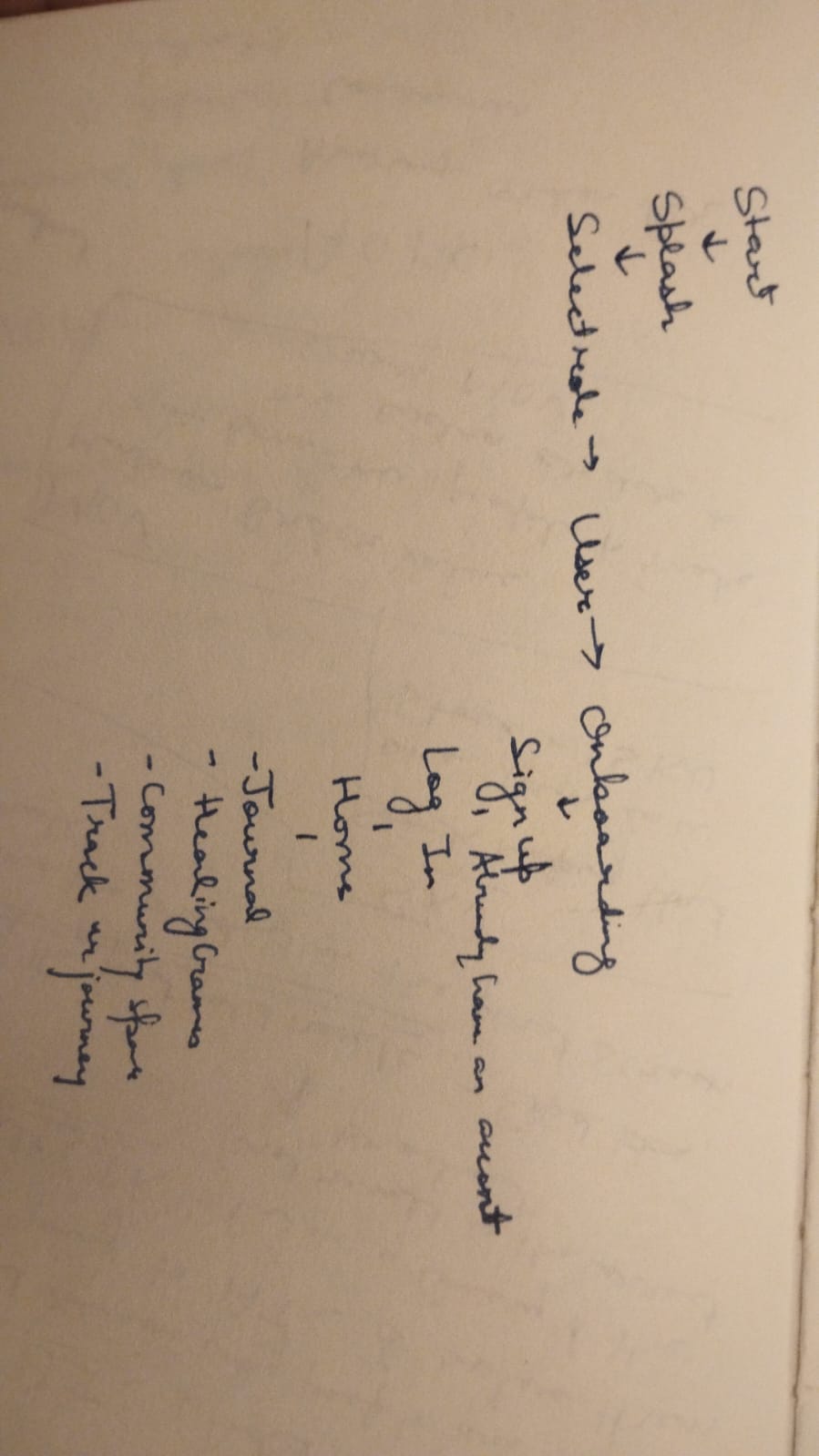
DELIVERABLES

Encourages consistent engagement
Reduces anxiety around app usage
Builds emotional trust with users
Creates a safe digital space
Tiko reimagines mental health apps by focusing on healing rather than productivity. By removing pressure and prioritizing emotional comfort, it creates a supportive experience that adapts to users’ mental states. The design emphasizes empathy, simplicity, and trust—making mental well-being more accessible and approachable.

